Showing posts with label Architecture. Show all posts

Tuesday, December 6, 2016

Stone related books for Christmas

Best Blogger Tips
Stone related books make great presents for your stone mad friends. Here are a few stone related books I recommend checking out if you are looking for some great christmas presents. Just remember if you're planning on ordering your books online, get ordering soon to be sure you receive them before Christmas.
Most of the links provided have free worldwide shipping. Some of the books need to be ordered from the artist's direct but I have added these links also. The prices I have shown are correct as of time of writing this post.
So in no particular order here are my recommendations for Christmas 2016:

A Legacy in Stone… The Artistry of Andreas Kunert


Andreas Kunert is a stone artist based in Victoria, Canada. He has a substantial and impressive portfolio of work. Much of his work has gone completely viral on the internet, popping up all over the place.
This book is a lovely catalogue of much of his work and a great addition to your bookshelf. 

Order this book here through the artists website 

Price $45.00 plus P&P


The Andy Goldsworthy Project

Andy Goldsworthy's beautiful ephemeral artworks have been rendered timeless in numerous photographic records. This book deals with Goldsworthy's work in nearly twenty years, and underscores the artists permanent output since 1984.
Many of his great stone creations are in this book.
A lovely chunky coffee table book. 

Click on the link below to buy with free worldwide shipping.
Price: €33.44 (including shipping and 20% off via the link below)

Andy Goldsworthy : Enclosure

Reflecting Goldsworthy's lifelong interest in the landscape of the British Isles, its history, and the people who work on it, Enclosure is a collection of ephemeral work that relates to sheep, including many of his dry stone enclosures.
A lovely chunky coffee table book. 

Click on the link below to buy with free worldwide shipping.
Price: €33.99 (including shipping and 43% off via the link below)


Stone by Design: The Artistry of Lew French

More than 125 gorgeous photographs showcase the beauty of award-winning stonemason Lew French's work in eight different homes, illustrating how rounded fieldstone, gray slate, rough granite, and even curvy driftwood can be incorporated into stunning pieces of functional art. 
I did a blog post on his work a while back which you can read here.
Click on the link below to buy with free worldwide shipping.
Price: €29.37 (including shipping via the link below)

Lew French's new book
Released just this summer, this second book on Lew French's most recent designs includes works like the huge outdoor water feature at an office building near Boston. A residential landscape on Chappaquiddick, as well as his own retreat home in the mountains of Brazil. Also featured are his framed art pieces, puzzled together from rock and driftwood
 Fans of natural building and all kinds of masonry will be more than impressed. 
I did a blog post on his work a while back which you can read here.
Click on the link below to buy with free worldwide shipping.
Price: €24.90 (including shipping and 11% off via the link below)
http://tinyurl.com/j6hll2h

Dan Snow: Listening to Stone
Listening to Stone is Dan Snows follow up to his first book  In the Company of Stone. In this second book Dan once again proves that he is not just one of America's premier artisans, but also one of our most articulate voices on the natural world and our relationship to it. Peter Mauss's tactile photographs of Snow's artistry are matched by the artisan's quietly compelling prose.

Click on the link below to buy with free worldwide shipping.
Price: €18.97 (including shipping and 11% off via the link below)

The Complete Pebble Mosaic Handbook

Maggy Howarth is one of the world's foremost pebble mosaic experts, known for the innovative traditional and contemporary designs she has used to create outdoor mosaics around the world.

This new edition is updated, revised and expanded by 32 pages to incorporate many new inspirational designs from the author's studio, Cobblestone Designs, including an experiment in 3-D, spirals and roundels, and large mosaic designs for community spaces. There is also a special section that explores pebble mosaics as a decorative art throughout history.

The book provides practical step-by-step instructions for creating mosaics using traditional and modern materials, tools and techniques. The 400 beautiful color photographs and illustrations offer inspiration and make this a stunning how-to book and wish-book.
Click on the link below to buy with free worldwide shipping.
Price: €31.39 (including shipping and 6% off via the link below)

Corbelled Domes


Corbelled domed structures are both fascinating and ancient in technique. The process of corbeling has remained unchanged for thousands of years. The proof of this is that many of these ancient structures still stand today, a testament to their solid construction method. Renate Lobbecke has been tracking down such structures for over 25 years. On her travels in 15 countries she has captured photographs depicting this unique phenomenon of designed nature."

Definitely recommend this one. You can find it in the link below with free worldwide shipping.
Price: €45.03 (including shipping and 6% off via the link below)
http://tinyurl.com/mdt57ag


Stone : A Legacy and Inspiration for Art
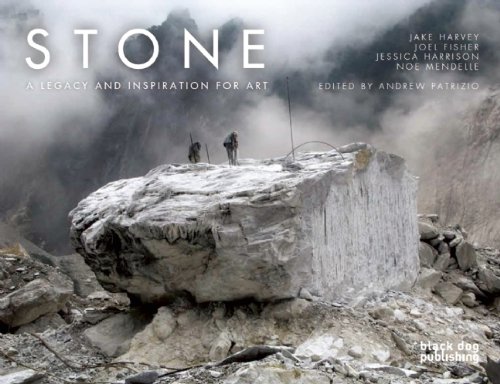

Stone: A Legacy and Inspiration for Art is a beautiful, visually stimulating book, exploring the delights of contemporary stone sculpture and stone carving. Stone is a major resource and inspiration for artists, craft-workers, and scholars in many areas, and also has huge attraction for a wider public, given its high visual impact, dramatic footage and timely re-evaluation of often hidden professions. Stone offers an introduction to the traditional techniques of stone carving and reviews methods of extraction that are dying out. The authors traveled worldwide learning, interviewing and photographing these unique processes. The photographs in this book show the stunning results. The book then goes on to look at the work of crafts people today in contemporary stone sculpture.
Click on the link below to buy with free worldwide shipping.
Price: €25.40 (including shipping and 13% off via the link below)
http://tinyurl.com/hrue564


The Art of Letter Carving in Stone
"The Art of Letter Carving in Stone" portrays the beauty of this age-old craft alongside practical instruction. Written by an eminent practitioner and teacher, it guides the novice through the basics of letter carving, drawn lettering and making simple designs, and for the more experienced it explains a new proportioning system for classical Roman capitals and demonstrates a useful approach to designing letterform variations.
A great book for those who carve stone or wish to begin carving.

Click on the link below to buy with free shipping.
Price: €21.65 (including shipping and 31% off via the link below)
http://tinyurl.com/j23gong

Irish Stone Walls: History, Building, Conservation by Pat McAfee
A unique history and 'how to' book on one of Ireland's most distinctive landscape features - the stone wall. The Irish countryside is a patchwork of over 250,000 miles of stone wall.
A great little book on Irish stone walls. By the great Irish waller Pat McAfee.

The Book depository have a great 18% off deal on this book at the moment so its just over €14 with free worldwide shipping. See link below

Dry Stone Walling. A Practical Guide
by Alan Brooks and Sean Adcock
159 pages 
A4 paperback, wiro-bound 
391 illustrations, by Linda Francis and Elizabeth Agate
 Dry stone walling is one of the most ancient building techniques, used worldwide where stone outcrops at the earth's surface. Britain's varied geology has produced a wide range of building styles, which demonstrate the waller's skill in making the best use of the locally available stone.

Price: £12.95 plus P&P via the link below

How to Build Dry-Stacked Stone Walls : Design and Build Walls, Bridges and Follies Without Mortar
Author John Shaw-Rimmington explains how to build a dry stacked stone wall, coursed walling, bridges, follies and more. He explains the important principles that contribute to the structural integrity of each. He covers all of the essential elements of dry stone building: * Design; * The foundation; * Packing or backfilling within the wall; * Slope of a wall face, an 'A' profile provides stability; * Bridge stones that span the width of the wall; * Coping, the top stones of a wall; * Weight-bearing stones in an arch, bridge, dome, etc. Shaw-Rimmington then guides the reader through the building process. With dedication to the task and the author's experienced guidance, the only limit is imagination. Click on the link below to buy with free shipping.
Price: €18.86 (including shipping and 23% off via the link below) http://tinyurl.com/hs8cdfa

The Art of the Stonemason
A fifth-generation stonemason discusses how to choose stone, build a wall on sloping ground, circular walls, windowsills, fireplaces, stairs, arches and hunchbacked bridges. 
A great practical guide to building stone features for anyone with some experience in stone building.

Click on the link below to buy with free shipping.
Price: €20.14 (including shipping via the link below)

Europe’s field boundaries
Written in two volumes 
Georg Muller has written a most wonderful book called 'Europe's Field Boundaries in 2 volumes. Georg basically spent the last 30 years traveling around Europe surveying dry stone walls, hedged banks etc in most European countries (Ireland, Britain, France, Germany, Italy, Croatia, Greece etc etc)
The books have almost 1300 pages and 5000 colour images. 

The books are beautifully bound with gold leaf and are a very special collection indeed, they are a real investment and highly recommendable. 

Information on how to order the books in the link below
Price for the two volumes together is €289 plus P&P


This is just a few of the great stone related books that are out there. I have lots more book recommendations in the book recommendations section of my blog here

Monday, March 19, 2012

'Temppeliaukio' The Rock Church, Helsinki

Best Blogger Tips
Last September my wife had to go to a conference to Helsinki, Finland, so I decided to tag along and see what Helsinki is all about.
On arriving I quickly noticed that much of the buildings and stone walls in Helsinki are made of a lovely pink granite. If you had a geologist to hand he would tell you the reason for this is because Helsinki sits on an indented Pegmatitic (pink) granite peninsula that makes up part of the Baltic shield. I did not have a geologist to hand, but walking in some of the many green areas in Helsinki, large outcrops of this rock were poking out of the ground everywhere I looked.
Most of the buildings built with this stone are highly manicured and well dressed. The central train station and the parliament buildings are fine examples of this. One building that I was very much taken by was a place called The Temppeliaukio Church or The Rock Church. 
Exterior, dry stacked wall of the rock church.
A stark contrast to the well dressed pink granite buildings around Helsinki, the rock church is rugged and unmanicured.
360º view of the inside
Temppeliaukio Church is a Lutheran church in the Töölö neighborhood of Helsinki. The project comes from an architectural competition won by the architect brothers Timo and Tuomo Suomalainen in 1961. The design of their project was recognized by the jury as “completely original” and respectful of the competition goal to “include the organization plan to keep as much of the giant granite outcrop that makes up Temppeliaukio Square intact.”
Their original solution to saving the square was to have the interior of the church site excavated and built into the rock. It dawned intuitively on the Suomalainen brothers when they visited the building site that in order to save the character of place, the rock itself had to be understood as a church and everything built at the site should be adjusted to accompany the character of the rock.
Before the Suomalainen brothers started designing the Temppeliaukio Church, they had done planning work for the Ministry of Defence and thus had become familiar with rock building.

The brothers' aim was to locate the floor of the sanctuary at the level of the widest and highest street, Fredrikinkatu Street, which ends at the square. This required the church hall to be cut into the bedrock. As a result this leads the visitor to the sanctuary without the need to climb stairs, simultaneously offering a friendly rather than overbearing experience of the church space.
The Rock church looking down at Temppeliaukio Square. Photo by MKFI via Wikipedia 
The seemliness transition of the rock walls from inside to outside. 
The 24m diameter roof is made up of a copper plate-covered dome, using a impressive 13.6 miles (22 km) of copper plate strips. The dome is connected to the natural rock wall by 180 window panes that let in natural light. Due to the varying height of the rock wall, each glass part of the roof is different in size.

As a result of the natural slope of the bedrock walls, the glass panes above the altar area are bigger, allowing the altar to become more illuminated compared to the other parts of the sanctuary 
13.6 miles (22 km) of copper plate strips covered the inside of the dome.
The alter
The colour scheme of the interior was based on the  red, purple and grey shades of granite. The metals were also carefully selected to match the colours of the stone. Steel, made bluish by hammering, non-oxidised copper for the entrance doors as well as for the front facing of the gallery and interior of the dome, concrete left in its raw state.

The brothers' vision was for the church to have a strong connection with nature and its surroundings, and they wanted the natural rough quarried stone to have a leading role in creating the atmosphere inside the sanctuary. To achieve this the bedrock walls were left rough, with all drill markings from the quarrying visible, while the resulting quarried rock was stacked on top to create the rest of the walls that continue out and over the park surface.
Drill marks leftover from  quarrying
Aside from the aesthetic and structural benefits, an additional benefit of the solid rough walls is its acoustic qualities, and with a seating capacity for 940, it is no wonder that the church is also a popular concert venue.    
The glistening Non-oxidised copper entrance doors to the church. 
Located right in the heart of Helsinki, The Temppeliaukio church is one of the most popular tourist attractions in the city, with half a million people visiting it annually. Lots more great photos of the church can be seen here. If you would like to see more photos of various stonework I came across on my trip to Helsinki you can check out my flickr album.

Sunday, December 18, 2011

Newgrange and the winter solstice.

Best Blogger Tips

One of the exterior walls of Newgrange
As the winter solstice is coming up, I thought it would be an appropriate time to talk about one of Ireland's oldest and most impressive stone structures.
I am talking of course about Newgrange in County Meath. (County Meath  is well known as Ireland’s Heritage Capital)
According to the most reliable Carbon 14 dates available from archaeology, it is believed that Newgrange (or Sí an Bhrú as it is know in Irish) was constructed over 5,000 years ago, around 3200BC. This makes it more than 600 years older than the Giza Pyramids in Egypt, and 1,000 years more ancient than Stonehenge in the UK. It was built during the Neolithic or New Stone Age by a farming community that prospered on the rich lands of the Boyne Valley. Knowth and Dowth are similar mounds nearby that together with Newgrange have been designated a World Heritage Site by UNESCO.


Archaeologists classified Newgrange as a passage tomb, however it is now recognised to be much more than a passage tomb. Ancient Temple is a more fitting classification, a place of astrological, spiritual, religious and ceremonial importance, much as present day cathedrals are places of prestige and worship where dignitaries may be laid to rest. The Mound or Cairn at Newgrange is about 300 feet in diameter covering an area of over one acre, and has 97 Kerbstones at the base of the cairn, some of which are richly decorated with megalithic art. The 19 metre long inner passage leads to a cruciform chamber with a corbelled roof. The amount of time and labour invested in construction of Newgrange suggests a well-organised society with specialised groups responsible for different aspects of construction. 

Newgrange through one of the native Hawthorn hedges that surround the site

The entrance into Newgrange with the famous entrance stone, kerbstone 1
To gain entry to the tomb, it would have been necessary to climb over the highly decorated kerb stone and then slide the heavy stone door that closed the entrance to the passage (now visible bolted to the right of the entrance.)
Newgrange is an incredibly popular tourist attraction, and is a particularly popular place to visit at this time of the year because of its alignment with the winter solstice.
Immediately above the entrance to the passage is a small opening known as a roof-box, which is in alignment with the Sun at the winter solstice and allows the Suns rays to penetrate the tomb and light up the central chamber during this period (December 19th to 23rd).
Short National Geographic Video about Newgrange

Above is a 3D animation of the passage way in Newgrange. See more cool 3D models of Newgrange on this site here


The inner passage of Newgrange (image from Wikipedia)


Looking down the inner passage (photo from Boyne Valley Tours)

Inside the chamber of Newgrange (photo by OPW)
Megalithic art carved on the roof stone of the east recess off the main chamber inside the mound at Newgrange.  (photo from Boyne Valley Tours)

Building Newgrange

The white quartz facade of Newgrange
As a stonemason what I find most fascinating about Newgrange is its construction.
Many of these stone slabs, 550 in number, were collected from where they had been lying in the landscape. Because many of the stones were found to be weathered, it is believed they were not quarried, so there would have been a huge logistical task in finding suitable boulders dotted throughout the landscape.

Some of the large kerbstones at the rear of the structure
Great effort and time was needed for the planning, gathering of materials and construction of these monuments. This is clearly evident from the vast distances the builders travelled to acquire the particular stone types. The majority of structural stones in the Boyne Valley tombs are greywacke. This stone type was quarried in the Clogherhead area, north of Drogheda, and shipped along sea and river, then finally log-rolled from a docking point on the Boyne up to the construction area at Newgrange.
The white quartz facade of Newgrange
The facade at Newgrange consists of white quartz, which has its origins in the Wicklow Mountains to the South of the site.
The interspersed granite boulders were collected from the North shore of Dundalk Bay. The long distances involved suggest a similar sea-faring route may have been a more practical choice than travelling across land. The majority of the cairn consists of a river rolled stone acquired from the banks and terraces of the river Boyne around 1km below the monument. It is estimated that some 200,000 tonnes of material are present in the cairn. It is not known for certain the exact building practices used by this Neolithic Culture. Archaeologists have suggested various theories. It is most likely that log-rolling, the erection of wooden scaffolding and earthen ramps were employed to shift the large boulders.
Michael J. O'Kelly, who excavated Newgrange, felt that the workforce involved in building Newgrange would have been divided up into about six gangs or teams, each with its own set of tasks and area of expertise.

Kerbstone 52 on the North-western side of the mound
There is no doubt that the people in charge of Newgrange's construction, from the master builder and architect down to the team foremen, were "intelligent and experienced", according to O'Kelly.
The corbelled roof  from inside the main chamber of Newgrange (photo from Boyne Valley Tours)
The passage and chamber orthostats (large stones set upright) would have been put in place before construction of the cairn itself actually began, and it is probable the kerb would have been marked out at this stage too. The addition of grooves onto the top surface of the passage roof stones shows that the builders were aware of the need to redirect water seepage from the cairn, and therefore keep the passage water-proofed.
The corbelled vault of the chamber is one of the finest of its kind in Western Europe today, standing intact without conservation or repair of any kind exactly as it did when first erected 5000 years ago. All of the orthostats (standing stones) in the chamber are used to support the corbelled roof. Some have leaned inwards over time due to the weight of the cairn material pressing down on the chamber. The tomb builders filled the gaps between the roof stones in the passage with sea sand and burned soil to keep the passage dry. The corbelled roof was constructed of horizontally laid courses of large slabs, each course partly resting on the one below it and partly oversailing it so that with each course the diameter of the roof diminished, until finally the vault was closed by a single capstone six metres above the floor. The outer ends of the corbels were buried in the cairn and were tilted slightly downward; this served to throw off the rainwater percolating through the cairn. It was a most effective weather-proofing and kept the chamber dry even in prolonged bad weather except in a few spots, now cured.

It is known that the white quartz, which was found on the ground in front of Newgrange during excavations, was not originally placed there by the builders. Some of the kerbstones which had fallen forward some time after the construction of the monument were found to be directly in contact with the subsoil, with no quartz beneath them. The reconstructed façade of Newgrange is controversial - many people feel that it is only an educated guess as to what the original tomb looked like. The reconstruction also cut away some of the mound so that visitors can walk around the carved kerbstone, rather than having to climb over it.
Professor Frank Mitchell suggested that the monument could have been built within a space of five years, basing his estimation upon the likely number of local inhabitants during the Neolithic and the amount of time they would have devoted to building it rather than farming. This estimate was however criticised by M.J. O’Kelly and his archaeological team, who believed that it would have taken thirty years to build at the very least.

Stonehenge buit 1000 years after Newgrang
e (photo by Gareth Wiscombe)
In the later centuries following the initial construction and use of the passage toumb at Newgrange, ritual practices changed but the site remained an important ritual focus. As elsewhere in Ireland and Britain, rituals shifted from the enclosed spaces of megalithic tombs to large open air enclosures called ‘henges’. Henges derived their name from the ultimate henge – Stonehenge – but were more typically formed from circular earthen banks, circles of pits, circles of upright timbers, or circles of upright stones (without the famous horizontal lintels that Stonehenge possesses.)   
The entrance to Newgrange as it looked when it was redescovered
The passage tomb was rediscovered in 1699 when material was being taken for a road building project, a local landowner, Charles Campbell, ordered some of his farm labourers to dig up a part of Newgrange, which then had the appearance of a large mound of earth, so that he could collect stone from within it. The labourers soon discovered the entrance to the tomb within the mound.


I must admit, I have been living in Dublin for over two years now, and I have only recently made the 45minute trip by car to Newgrange. I would definitely recommended making the trip if you are in the area, or even just visiting Dublin.
Admission to the chamber of Newgrange for the Winter Solstice sunrise is by lottery. Application forms are available at the reception desk in the Brú na Bóinne Visitor Centre, where there is a special post box for completed application forms. There were 31,531 applications submitted for the 2011 Winter Solstice Draw. Application forms are now available for the 2012 Solstice Lottery Draw which will take place on September 28th 2012.
For more information on tours check out http://www.boynevalleytours.com/
For more informtion on Newgrange check out http://www.newgrange.com/
Thanks to Michael Fox from Boyne Vally Tours for the use of the photos from his website for this post.

Monday, July 4, 2011

The Bottle Houses, Prince Edward Island

Best Blogger Tips
The use of glass in the landscape is something that has interested me for some time, and is something I hope to incorporate into one of my stone projects at some stage. It is buildings like these bottle houses below that make me want to try it out for myself. What an amazing place it is. And as with all inspiring places lies a compelling story of a innovative mind with a creative dream.
 

The Bottle Houses are located at Cap-Egmont, Prince Edward Island, on the gorgeous east coast of Canada. They were built by the late Édouard T. Arsenault.
In 1979 Édouard received a postcard from his daughter of a glass bottle castle she had visited on Vancouver Island in British Columbia, he was so captivated by it, that he was instantly inspired to make his own glass bottle creation. 
Édouard T. Arsenault
That same summer, he started collecting bottles from his community, from a local restaurant, community dance halls, friends, relatives and neighbours. He spent the winter in the basement of his home, cleaning bottles, removing labels and dreaming of his project. In the spring of 1980, at the age of 66, he began construction of his pet project, not quite sure where it was going to take him. As his six-gabled structure was taking form, visitors started coming in. Impressed by his work, they encouraged him to continue and to advertise it as a tourist attraction. And so, in 1981, the first Bottle House was open to the public.

From 1980 to the spring of 1984, he cleverly cemented over 25,000 bottles of various shapes, sizes and colours, into three fantasy-like buildings.
 
Six Gabled House
The first bottle house was built in 1980 out of approximately 12,000 bottles, measuring 20 feet x 14 feet with three main sections. Its six gables and the patterns produced by the careful choosing of colours and sizes of bottles truly makes this a unique building. Mr. Arsenault would cement between 300 and 400 bottles per row, using a total of approximately 85 bags of cement over a six month period.
The Round Tavern
In 1982, Édouard decided to try his luck at a second building, using approximately 8,000 bottles this time. This tavern-like hexagonal structure was originally used to house the attraction's souvenirs and handcrafted items made by his wife Rosina. Today the tavern houses a large selection of interesting bottles collected by Edouard. Whenever he came across a bottle that had a special feature, he preferred to keep it for display rather than using it in the construction. 
The Chapel
The third building constructed by the late Édouard Arsenault is truly a work of art. Approximately 10,000 bottles were transformed in 1983 to become a magnificent little chapel, complete with pews and altar. At the time of his sudden death at the age of 70, in the spring of 1984, Mr. Arsenault still had a bit of work to do, he intended to make the steeples higher and the front pew was not quite completed. At sunset, a symphony of light and colours streams in from behind the altar.


Rebuilding Works
Unfortunately, Prince Edward Island’s winters are not very gentle. The railway ties used as foundations did not withstand the effects of the bad winter frosts. Over the years, the buildings deteriorated to the point that they had to be rebuilt.
Between 1992 to 1998, the original buildings were photographed from all angles, carefully measured and then brought down by hand, recovering the glass bottles from the mortar. Four foot foundations were then laid before local bricklayers carefully reconstructed the buildings, using the same bottles as in the original structures and following the same basic designs. The roof and the central cylinder of the second building are the only components that were maintained in their original form.

Altogether over 25 000 recycled bottles were ingeniously cemented together to create the Bottle Houses. The houses are nestled in a number of mature gardens originally created by Édouard. He built the stonework and developed the flower gardens surrounding the buildings at the beginning of his retirement years in 1974.
Étienne Gallant at work
on the large bottle
The stones were picked locally by him and put together to create a peaceful setting for the gardens surrounding the houses that were to be built later. A keen gardener, he also planted all the trees on the property and enjoyed growing a wide variety of perennials and annuals. The present owner, his daughter Réjeanne, also enjoys this task from year to year, with the help of her son Étienne Gallant who also designed and built a large bottle near the road. This new thirteen feet high structure required 2,000 bottles.


-------------------------------------------------------------------------------
I still have much to discuss on the topic of recycled glass in the garden, but this is a post for another day. If you would like to see more bottle houses check out this link http://www.agilitynut.com/h/otherbh.html lots more wacky bottle creations to be found there.  The photos for this post are from the bottle house website (used with their kind permission of course) Be sure to check out their website for more information and photos. http://www.bottlehouses.com/